Do Hot Air Balloons Really Fly Over the Teotihuacán Pyramids?
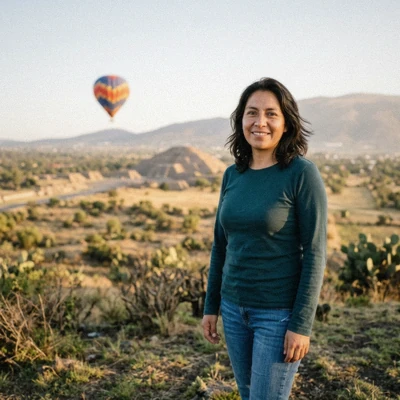
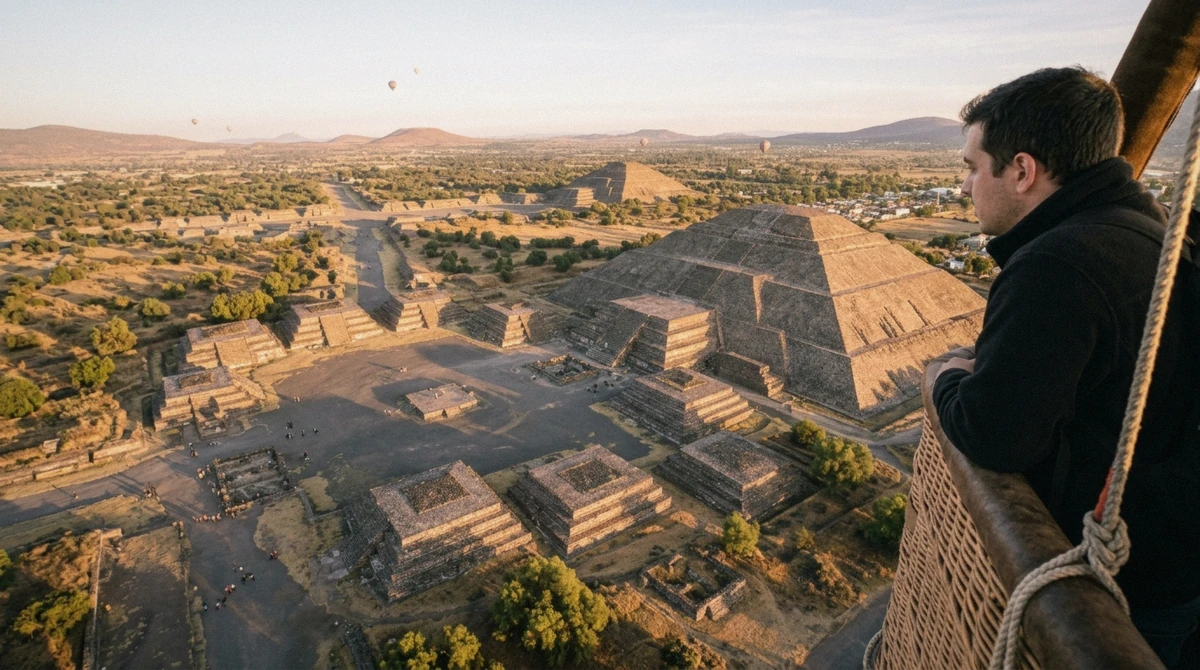
On nearly every hot air balloon flight near Mexico City, you can expect to see the Pyramid of the Sun, the Pyramid of the Moon and the Avenue of the Dead from above, and on roughly 90% of flights the balloon passes directly over or very close to them. What no honest operator can promise is the exact line the flight takes. Pilots control altitude, not direction, the wind decides the path, so a direct overflight is very likely, not certain. This guide breaks down what you can actually expect to see, tier by tier, with a map of what sits below you and why the wind, not the pilot, has the final say. Browse the hot air balloon flights over Teotihuacán on this site once you know the odds.
Quick answer
On nearly every flight, passengers see the Pyramid of the Sun, the Pyramid of the Moon and the Avenue of the Dead from above, and on roughly 90% of flights the balloon passes directly over or very near them. What it can't promise is the exact line, pilots steer altitude only, the wind sets the direction, so a direct overflight is very likely, not certain.
Key takeaways
- Nearly every flight sees all three landmarks, the Pyramid of the Sun, the Pyramid of the Moon and the Avenue of the Dead, from above
- Roughly 90% of flights pass directly over or very near the pyramids themselves
- Pilots control altitude only, the wind sets the direction, so the exact path shifts flight to flight
- You can no longer climb the pyramids on foot, the balloon is the only elevated view left
- Flights spend roughly 30 to 50 minutes in the air
- Cerro Gordo, the mountain north of the site, is the local wind reference pilots read before takeoff
At a Glance: What You'll Actually See
Rows are ordered by how likely you are to actually see each one, strongest first.
| Sight | Where in the Valley | Best Conditions | How Likely |
|---|---|---|---|
| Pyramid of the Sun | Center of the archaeological zone, east side of the Avenue of the Dead | Any clear dawn | Nearly every trip |
| Pyramid of the Moon | North end of the Avenue of the Dead | Any clear dawn | Nearly every trip |
| Avenue of the Dead | The roughly 2 km axis connecting both pyramids | Any clear morning | Nearly every trip |
| Cerro Gordo | Mountain on the horizon, north of the site | Any clear morning | Nearly every trip |
| The launch fields and valley floor | West and southwest of the archaeological zone | Any clear morning | Nearly every trip |
| A direct pass over the pyramids themselves | Directly above the Pyramid of the Sun or Moon | Wind blowing from the launch fields toward the ruins | Most trips |
| Other balloons aloft in the same sky | Scattered across the valley at cruising altitude | Peak dry-season mornings, November-January | Most trips |
| A close, hovering pass right at pyramid height | Directly beside or over the pyramid summit | Light, well-aligned wind | Lucky-day |
The top five rows are close to a sure thing on a clear morning, since the balloon launches close enough to the valley that both pyramids and the Avenue of the Dead are visible from altitude almost regardless of the exact flight path. The direct overflight is the one variable genuinely outside anyone's control.
Where the Wind Takes You
Pilots launch from open fields west and southwest of the archaeological zone and climb straight up before drifting with whatever wind is moving through the valley that morning. Cerro Gordo, the mountain to the north, is the reference point pilots read before takeoff, since the way the air moves around it signals which way a flight is likely to drift. When the wind carries the balloon east toward the ruins, the flight tracks close to the Avenue of the Dead corridor and a direct pass over one or both pyramids becomes far more likely. When it doesn't, the balloon still clears the valley with clear views of both structures, just from a short distance to one side rather than straight overhead.
Nearly Every Trip
Pyramid of the Sun
The largest structure at Teotihuacán, and the third-largest pyramid anywhere on Earth at roughly 65 meters tall. From the launch fields it sits close to dead center of the valley, impossible to miss even before the balloon leaves the ground. You can expect to see it from above on nearly every trip, its stepped platforms catching the first direct sunlight of the day while the rest of the valley is still in shadow.
The Aztecs, who arrived centuries after the city was already abandoned and in ruins, named the whole site "the place where the gods were created," believing it too grand to have been built by human hands.
Pyramid of the Moon
Smaller than the Sun pyramid but arguably the better photograph, framed by the ridgelines that flank it on either side. It anchors the north end of the Avenue of the Dead, and from altitude the plaza in front of it reads as one continuous ceremonial complex rather than two separate structures. It shows up on nearly every flight, a short distance north of its larger neighbor.
On the ground, you can no longer climb either pyramid, so this is now the only way to look down on the plaza the way its builders once could from the summit steps.
Avenue of the Dead
The roughly 2-kilometer processional axis connecting the two pyramids, running dead straight through the middle of the ancient city. From the basket it reads as a pale stone spine cutting through the valley, flanked by the low platforms of dozens of smaller structures most visitors on the ground never notice. Nearly every flight crosses or runs parallel to it at some point.
The sunrise flight with cave breakfast times its route to catch it early, while the light is still low and raking across the stone.
Most Trips
A Direct Pass Over the Pyramid of the Sun or Moon
This is the one nobody can promise you outright, and the honest number is roughly 90%. Pilots control only how high or low the balloon flies, never left or right, so the wind on any given morning decides whether your basket drifts directly above the stone or passes a few hundred meters to one side. Most trips get the direct pass.
When the wind lines up with the valley's usual dawn pattern, reading off Cerro Gordo to the north, the balloon tracks straight down the Avenue of the Dead corridor. When it doesn't, you still see both pyramids clearly from nearby, just not from directly overhead.
Other Balloons Aloft in the Same Sky
Dry-season mornings, especially November through January, often put a dozen or more balloons in the air over the valley at once, each drifting along a slightly different line depending on when it launched. Most trips catch at least a few others in frame, which is half the reason the sunrise photos from this valley look the way they do. The Volare flight with the mariachi buffet breakfast launches from one of the busier fields, so a sky full of other balloons is close to a sure thing on that particular tour.
Lucky-Day
A Close, Hovering Pass Right at Pyramid Height
On a calm morning with the wind cooperating exactly right, a pilot can hold the balloon at a height that puts you level with the top platform of the Pyramid of the Sun for a few long seconds, close enough to make out individual stone blocks rather than just the outline of the structure. Nobody should book expecting this, it depends entirely on that morning's wind, ourselves included. When it happens, it tends to be the moment most passengers describe first once they're back on the ground, precisely because it wasn't promised.
Myths and What to Actually Expect
The most common mix-up is expecting to walk up the pyramids the same day, since that's how most people picture a Teotihuacán visit. You can't. Climbing both structures has been closed to the public for years, so the summit view that older photos and blog posts show simply isn't available on the ground anymore. The balloon is now the only way to look down on the site the way early visitors once could from the top step.
The second expectation worth resetting is time in the air. A flight runs roughly 30 to 50 minutes total, not the hour-plus some travelers picture from balloon festivals elsewhere. That's enough time to cross a meaningful stretch of the valley and take in both pyramids from altitude, but it moves faster than most people expect once the burner lifts you off the field. None of this changes how the flight itself is regulated, if safety is your main question rather than sightseeing, our breakdown of whether a Teotihuacán balloon flight is safe covers pilot certification and the safety record directly.
When to Fly for the Best Overflight Odds
Dry season mornings, November through May, tend to bring the calmest, most predictable wind, which is also when a direct pass over the pyramids is most consistent. For the full month-by-month breakdown of temperatures, wind and crowd size, see our guide to the best time for a balloon ride over the Teotihuacán pyramids rather than a repeat of the calendar here. Whatever month you fly, the wind on that specific morning matters more than the season it falls in, the dry-season pattern above just shortens the odds in your favor.
How to Maximize What You See
A few habits genuinely change what you come away with, based on what we've picked up watching this valley from the ground and from the basket both.
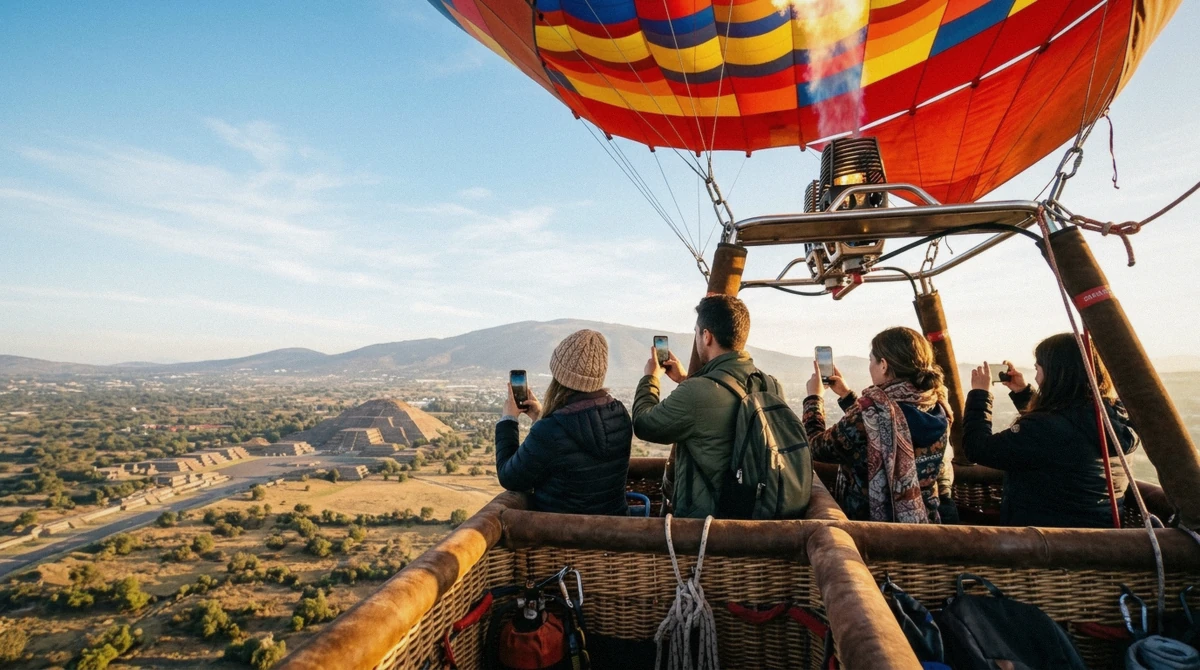
- We always ask, if it's offered, which side of the basket faces the pyramids once the balloon settles into its cruise, and post up there rather than staying wherever we happened to board
- We keep the phone or camera out and ready before liftoff, not after, since the best angle on the Pyramid of the Sun often comes in the first few minutes while the balloon is still climbing
- We watch Cerro Gordo as much as the ground, since the direction the balloon drifts relative to that mountain is the same cue the pilot reads to judge whether the flight is tracking toward a direct pass
- We don't fixate on getting directly overhead, a close pass from the side, with both pyramids and the full Avenue of the Dead in frame, often makes a better photo than looking straight down at one structure
- We treat the other balloons in the sky as part of the shot, not a distraction, since a valley scattered with a dozen colorful envelopes at sunrise is a genuinely rare sight on its own
- We stay quiet and still for the few seconds a hover pass happens, if one does, since that's the moment easiest to miss by fumbling with a phone instead of just looking
What to Expect, By What You're Hoping For
If a direct overflight is your top priority
fly in the dry season, November through May, when winds are calmest and the roughly 90% pass-over rate holds most consistently
If you want the best photos of both pyramids together
don't fixate on being directly overhead, a side angle catching the full Avenue of the Dead often reads better in a photo anyway
If you're worried about not seeing the pyramids up close on the ground
know that ground-level access is separate from the flight, most packages add free time at the pyramids afterward as part of the day
If you want to maximize the chance of a close hover pass
there's no way to book that specifically, it comes down to that morning's wind, not the tour you choose
If you're deciding whether the flight or a ground-only pyramid visit is worth it
read our honest breakdown of whether a Teotihuacán balloon flight is worth it before you book
Frequently Asked Questions
Will I definitely fly directly over the Pyramid of the Sun?
Very likely, not certain. Roughly 90% of flights pass directly over or very near it, but pilots control altitude only, the wind decides the exact path each morning.
What will I see from a hot air balloon over Teotihuacán?
On nearly every flight, the Pyramid of the Sun, the Pyramid of the Moon and the Avenue of the Dead from above, plus Cerro Gordo and the valley floor. On most trips, a direct pass over the pyramids and other balloons in the sky.
Can I still climb the pyramids after my flight?
No. Climbing both the Pyramid of the Sun and the Pyramid of the Moon has been closed to the public for years. The balloon is now the only elevated view of the site available.
How long does a hot air balloon flight over Teotihuacán last?
Roughly 30 to 50 minutes in the air, part of a longer morning that runs 6 to 7 hours door to door once CDMX pickup, the launch field wait and any breakfast stop are included.
Why doesn't the pilot just fly straight over the pyramids every time?
Because a hot air balloon can't be steered left or right. Pilots only control how high or low the balloon flies, the wind on that specific morning sets the direction, which is why a direct pass is likely, never a sure thing on command.
What's the best way to see both pyramids in one flight?
You don't need to do anything special, both are visible from altitude on nearly every flight regardless of the exact path. Ask to stand on the side of the basket facing the ruins once the balloon settles into its cruise for the clearest view.
How many other balloons will be in the sky with me?
It varies by season and by tour. Dry-season mornings, November through January, often put a dozen or more balloons aloft over the valley at once, since that's the busiest, calmest stretch of the year to fly.
The pyramids themselves are close to a sure thing from up there, the Sun, the Moon and the Avenue of the Dead all read clearly on nearly every clear-morning flight. What shifts is how close the wind lets you get, and that honest uncertainty is part of what makes the flight worth talking about afterward rather than just another checked box.