Best Time of Year to Fly Over Teotihuacán: Month-by-Month

November through April is the best time for a hot air balloon ride over Teotihuacán near Mexico City, the dry season, when mornings run calm and stable and the weather-cancellation rate drops under 5%. June through October, the rainy season, is the window to plan around, not necessarily avoid entirely, since the cancellation rate climbs to roughly 15% and afternoon storms are common, though mornings usually stay clear even then. I've tracked what actually changes month to month for balloon rides over the Teotihuacán pyramids, and below is the real breakdown, not the generic "anytime is a good time" line most pages give you.
Quick answer
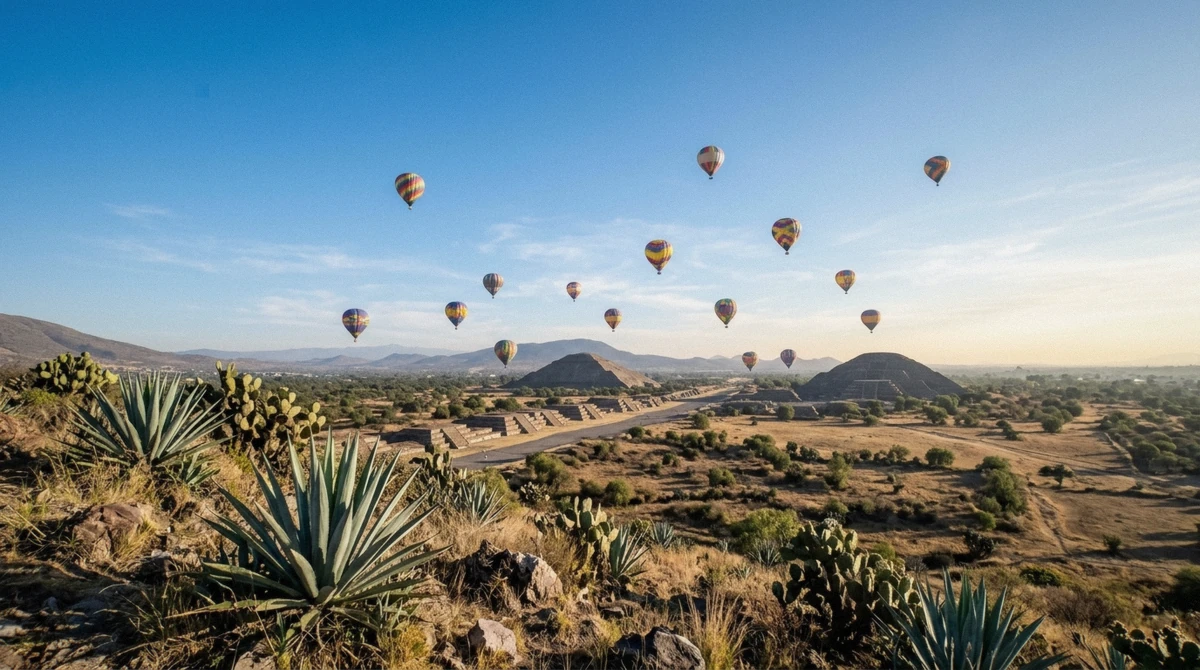
November through April is the best time to fly a hot air balloon over Teotihuacán, when the dry season keeps mornings calm and the weather-cancellation rate under 5%. June through October, the rainy season, still flies most mornings since rain typically falls in the afternoon, but the cancellation rate climbs to roughly 15%.
Key takeaways
- Best window: November through April, dry season, cancellation odds under 5%
- Runner-up: the shoulder weeks either side of the dry season still fly reliably, though rain risk creeps up faster heading into September and October than heading into April or May
- Season to plan around: June through October, roughly 15% cancellation odds, mostly from afternoon storms rather than morning ones
- Counterintuitive fact: it's wind, not rain, that grounds a flight; flights reschedule once wind tops roughly 15 km/h (10 knots), and mornings in the rainy season are usually clear since the rain falls later in the day
- Best time of day: sunrise, takeoff between 6:00 and 7:30 a.m., the only real window since afternoon wind rules out a safe launch
- Balloons fly 365 days a year, weather permitting, so there's no month when flights simply stop running
Seasons at a Glance
Read the Verdict column first; it collapses each month's conditions, weather and crowd level into one call. For camera settings and the best shots, see our Teotihuacan balloon photography guide.
| Month | Conditions | Weather | Crowds | Verdict |
|---|---|---|---|---|
| January | Dry season, low cancellation risk | Cool, clear mornings, cold at dawn | High (many balloons, colorful mornings) | Best overall |
| February | Dry season, low cancellation risk | Clear, cold dawn air | Moderate to High | Excellent, calm |
| March | Dry season, low cancellation risk | Clear mornings, warming midday | Moderate | Great, fewer balloons |
| April | Dry season, low cancellation risk | Warm, clear, driest stretch | Moderate | Great, reliable launches |
| May | Transitional, rain risk building | Hot midday, first afternoon storms possible | Moderate | Good, book morning slots |
| June | Rainy season begins, ~15% cancellation odds | Afternoon storms, mornings typically clear | Moderate | Good, mornings still clear |
| July | Rainy season, ~15% cancellation odds | Afternoon rain, clear dawn | Moderate to High (school holidays) | Fair, watch the forecast |
| August | Rainy season, ~15% cancellation odds | Heaviest afternoon rain, clear mornings | High (summer holidays) | Fair, crowded and wet |
| September | Rainy season, ~15% cancellation odds | Frequent afternoon storms | Moderate | Fair, recheck forecast |
| October | Late rainy season, ~15% cancellation odds | Storms tapering off | Moderate | Improving, transitional |
| November | Dry season returns, low cancellation risk | Clear, cooling nights | High (many balloons) | Excellent, colorful skies |
| December | Dry season, low cancellation risk | Coldest dawns, clear skies | High (holiday travelers) | Excellent, cold but clear |
The pattern holds all year: dry-season months, November through April, run low cancellation risk with clear mornings, while rainy-season months, June through October, still typically launch clear at dawn but carry roughly triple the cancellation odds by afternoon.
Temperatures & Rainfall
Typical ranges, not daily guarantees. Teotihuacán sits at roughly 2,300 meters altitude, so dawn is genuinely cold even when the daytime forecast in Mexico City reads warm.
| Month | High | Low | Rain |
|---|---|---|---|
| January | 25°C (77°F) | 14°C (57°F) | Low |
| February | 26°C (79°F) | 14°C (57°F) | Low |
| March | 28°C (82°F) | 15°C (59°F) | Low |
| April | 29°C (84°F) | 16°C (61°F) | Low |
| May | 30°C (86°F) | 17°C (63°F) | Moderate |
| June | 28°C (82°F) | 17°C (63°F) | High |
| July | 27°C (81°F) | 17°C (63°F) | High |
| August | 27°C (81°F) | 16°C (61°F) | High |
| September | 26°C (79°F) | 16°C (61°F) | High |
| October | 26°C (79°F) | 15°C (59°F) | Moderate |
| November | 25°C (77°F) | 14°C (57°F) | Low |
| December | 25°C (77°F) | 14°C (57°F) | Low |
Morning lows at liftoff hold in the typical 14 to 18°C range (57 to 64°F) all year, genuinely cold enough for a jacket, while midday highs typically reach 25 to 30°C (77 to 86°F). May runs the warmest afternoons of the year, January and December the coldest dawns. Figures are sourced from Mexico's National Meteorological Service, SMN/CONAGUA, and are typical ranges; check the current forecast close to your dates.
Best Season by Traveler Type
If you're chasing the best sunrise photos
November through January, when clear skies and more balloons in the air together make for the most colorful shots
If you're bringing kids or a nervous flyer
November through April, the calmest, most reliable dry-season window with the least chance of a weather rebooking
If this is your first flight and you want the safest bet
November through April, cancellation odds under 5%, the most forgiving window rather than the single most dramatic one
If you're on a tighter budget
there's no published seasonal ticket discount, but the rainy season, June through October, tends to have more flexible last-minute openings since demand runs lower
If your dates are already fixed
any month works since balloons fly 365 days a year, weather permitting; just book the earliest morning slot and keep one flexible spare day if your trip allows it
Winter (December to February): Coldest Mornings, Clearest Skies
Winter is the heart of the dry season and the most reliable stretch on the calendar: December and January are the coldest mornings you'll fly, with dawn temperatures at the low end of the typical 14 to 18°C range, but skies stay clear and cancellation odds sit under 5%. This is also when the most balloons take to the air at once, November through January, so a December or January sunrise often means sharing the sky with a dozen other baskets, a genuinely striking sight if you don't mind the extra crowd. Layer up more than you think you need to; for the full breakdown of exactly what to wear at this altitude, see what to wear on a Teotihuacán balloon flight.
- Temperature: coldest dawns of the year, low end of the 14 to 18°C range; midday still climbs to 25 to 27°C
- Crowds: high, more balloons in the air than any other stretch of the year
- Price: no published seasonal premium on tickets, but demand is real, book ahead
- Booking lead time: a week or more for December and January weekend mornings
The Sunrise Balloon Flight with Cave Breakfast runs daily through winter and is the most-booked option on this site.
Spring (March to May): Warming Fast, Rain Still Weeks Away
Spring closes out the dry season on a warm note. March and April hold the same low cancellation odds as winter, with mornings warming enough that a lighter layer works, and by May the days themselves turn into the hottest of the year even though the rains haven't started yet. The honest trade-off: May sits right at the edge of the dry season, and while flights still typically launch into clear mornings, the first isolated afternoon storms of the year can start appearing by the second half of the month.
- Temperature: mornings 15 to 17°C, midday climbing toward the top of the typical range, up to 30°C by May
- Crowds: moderate, fewer balloons than the November-to-January peak
- Price: no seasonal ticket premium published
- Booking lead time: a few days out is usually enough outside Easter week
The Volare mariachi buffet tour runs well through this stretch, one of the longest-running operators on the route.
Summer (June to August): Warmest Days, First Real Storms
Summer is the rainy season's opening act. Mornings still typically launch clear, since the season's storms build through the day and break in the afternoon, but the cancellation rate climbs to roughly 15% across June through October as a whole, noticeably higher than winter or spring. July and August also carry Mexico's main summer school-holiday travel, so balloon slots book alongside everything else in the valley.
If your dates are fixed for summer, book the earliest morning slot you can and keep a spare day in your itinerary if possible.
- Temperature: mornings 16 to 17°C, midday holding around 27 to 28°C
- Crowds: moderate to high, especially late July and August with school holidays
- Price: no seasonal ticket premium published, but slots fill faster with holiday demand
- Booking lead time: a week ahead for August weekend mornings
The small-group ride is worth booking further ahead in summer, since its fifteen-passenger cap sells out faster than the larger-basket tours.
Autumn (September to November): Storms Fade, Skies Reopen
Autumn is the rainy season winding down. September still carries real storm risk, on par with summer's roughly 15% cancellation odds, but by October the pattern is visibly easing, and November marks the dry season's return with clear mornings and the balloon crowds building back up again. This is a genuinely underrated window: fewer summer crowds than August, not yet the peak demand of December, and improving weather by the week.
- Temperature: mornings 14 to 16°C, midday cooling from around 26°C in September to 25°C by November
- Crowds: moderate in September and October, building toward high again by late November
- Price: no seasonal ticket premium published
- Booking lead time: a few days out through October, a week ahead once November's dry-season demand picks up
The La Gruta cave breakfast and pyramids tour is a solid pick this stretch, its longer 7-to-8-hour day matching the cooler, clearer autumn mornings well.
The Best Month If You Only Have One Morning
If you can only pick one morning all year, take it in January. Here's the ranked shortlist I'd give a friend with a single open date.
- January: coldest but clearest, cancellation odds under 5%, and the most balloons sharing the sky of any month
- November: dry season just returning, clear mornings, thinner holiday crowds than December
- April: warm, dry, clear, the last reliably calm month before the rains build
- October, if your dates are fixed there: storms are tapering off and mornings still usually launch clear, even if the odds aren't as strong as the dry season
The Worst Time to Visit, Honestly
If I had to name one stretch to steer around, it's August and September. Afternoon storms run heaviest, cancellation odds sit at their roughly 15% peak, and August adds Mexico's summer school-holiday crowds on top of the weather risk. It still works for travelers whose dates simply fall there, since mornings typically launch clear even in the thick of the rainy season, and for photographers drawn to dramatic storm-light skies rather than a flat blue morning.
Anyone hoping for the calmest, most predictable single shot at a flight should look at a different window instead.
What Actually Affects Conditions
Most people assume rain is what cancels a hot air balloon flight over Teotihuacán. It's actually wind. A balloon pilot can work around a passing shower more easily than steady wind above roughly 15 km/h (10 knots), since wind, not rain, is what makes a safe launch and landing impossible.
That's also why mornings usually fly clear even deep in the rainy season: the valley's summer storms build through the heat of the day and typically break in the afternoon, long after the 6:00-to-7:30-a.m. launch window has already come and gone. The actual triggers for a rescheduled flight are wind above that roughly 15 km/h threshold, active rain or a thunderstorm at launch time, or dense fog, not the fact that it rained the night before or will rain again that evening. For what you'll actually see once you're airborne in any given month, see flying over the pyramids: what you'll actually see.
Best Time of Day
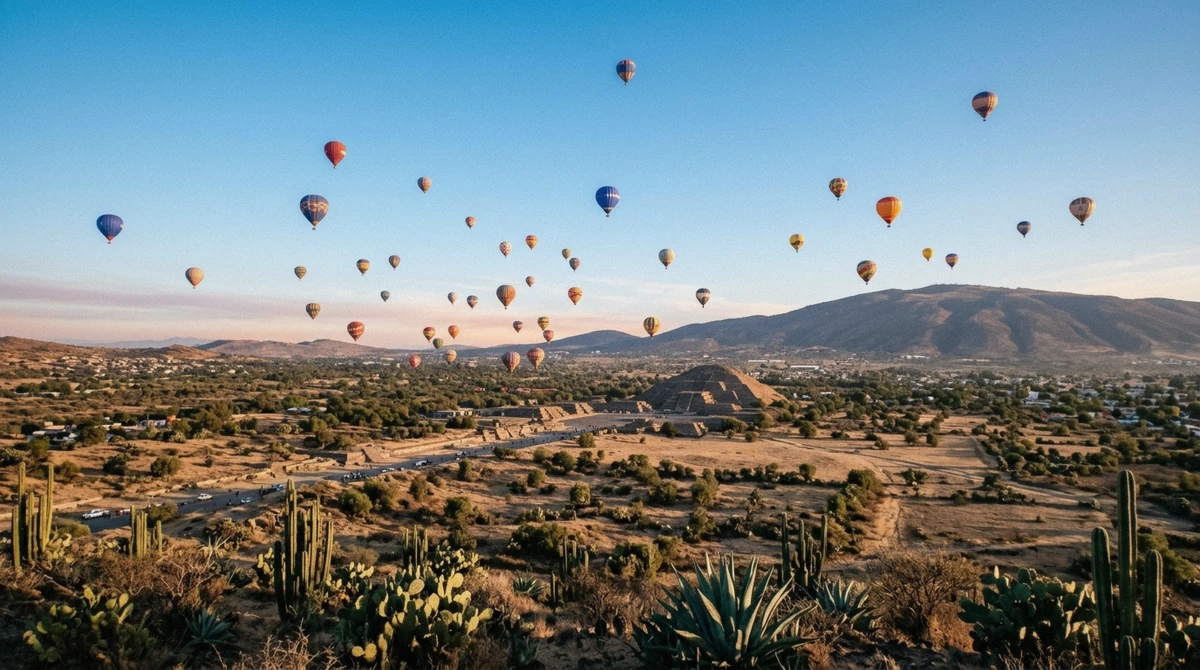
Sunrise is the only real answer here, not a preference but a hard operational fact: every operator on this route launches between 6:00 and 7:30 a.m., because dawn is when wind is calmest and most predictable across the whole day. By mid-morning, rising heat starts stirring up wind that makes launching and landing unsafe, which is why there's no midday or afternoon balloon option anywhere in Teotihuacán, regardless of operator. The one thing worth planning around within that window: book the earliest slot your chosen operator offers, since the calmest air is usually right at first light, before the sun has had time to warm the valley floor at all.
The balloon flight with drone video departs among the earliest slots on this site, worth it if catching the very first light matters to you.
What If the Weather Turns?
A gray or drizzly evening the night before your flight isn't the same as a cancellation. Operators make the actual call before around 5:30 a.m., once they can see the morning's real wind and rain, and reschedule to a new date or offer a full refund if launching isn't safe, with many operators allowing a free reschedule within 90 days. Cancel yourself 24 or more hours ahead and you're due a full refund; inside 24 hours, most bookings don't refund.
For the complete breakdown of what actually happens hour by hour when a flight gets called off, see what actually happens if your Teotihuacán balloon flight is cancelled for weather.
So, When Should You Go?
November through April gives you the calmest mornings of the year and cancellation odds under 5%, with November through January adding the bonus of more balloons sharing the sky at sunrise. June through October is the runner-up for anyone whose dates simply fall there, since mornings still typically fly clear even in the rainy season, just with roughly 15% higher odds of a reschedule. If one honest window deserves the most caution, it's August and September, when storm risk sits near its yearly peak.
Whatever month you land on, book the earliest sunrise slot you can get.
Frequently Asked Questions
What is the best month to fly a hot air balloon over Teotihuacán?
November through April, when the dry season keeps mornings calm and cancellation odds under 5%.
Is a Teotihuacán balloon flight good in the rainy season?
Yes, with a caveat. Mornings still typically launch clear even in the rainy season, June through October, since storms usually build through the day and break in the afternoon, but the cancellation rate does climb to roughly 15% across those months.
How far in advance should I book in peak season?
A week or more for a December-through-January weekend morning, or an August weekend during Mexico's summer school holidays. Outside those windows, a few days' notice is usually enough.
When is the rainy season in Teotihuacán?
June through October, with September carrying some of the heaviest afternoon storm risk of the year, though mornings still usually launch clear. Full mechanics of what actually cancels a flight are in what happens if weather cancels your Teotihuacán balloon flight.
Morning or afternoon, which is better for a balloon flight?
Morning, always. Every operator launches at sunrise, between 6:00 and 7:30 a.m., since that's the only calm-wind window of the day; there's no afternoon option anywhere on this route.
When are Teotihuacán balloon flights least crowded?
November through April on weekday mornings, outside the December-through-January and August peaks. Weekday dry-season flights are the closest thing to a quiet sunrise on this route.
How many days should I plan for if I want the best odds of flying?
One flexible day is usually enough in November through April. In the rainy season, building in two or three flexible days meaningfully improves your odds of catching a clear morning.
Twelve months a year don't actually behave the same, whatever the marketing photos suggest, and the calendar only tells half the story here. Check the real forecast for your dates close to the morning itself, since even September can hand you a perfectly calm sunrise, and a January trip can still get bumped by an unlucky cold front. Pick your season for the reason that matters most to you, the calmest odds, the most balloons in the sky, or simply the dates you already have, and let the 5:30 a.m. weather call make the final decision.