Best Photo Spots and Photography Tips for a Teotihuacán Balloon Flight
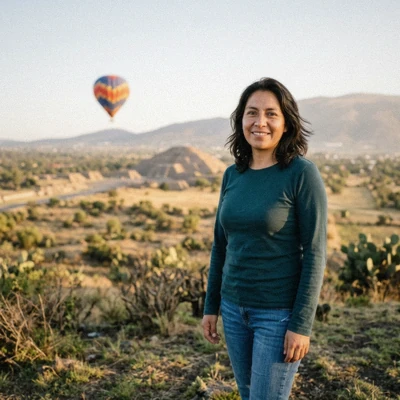
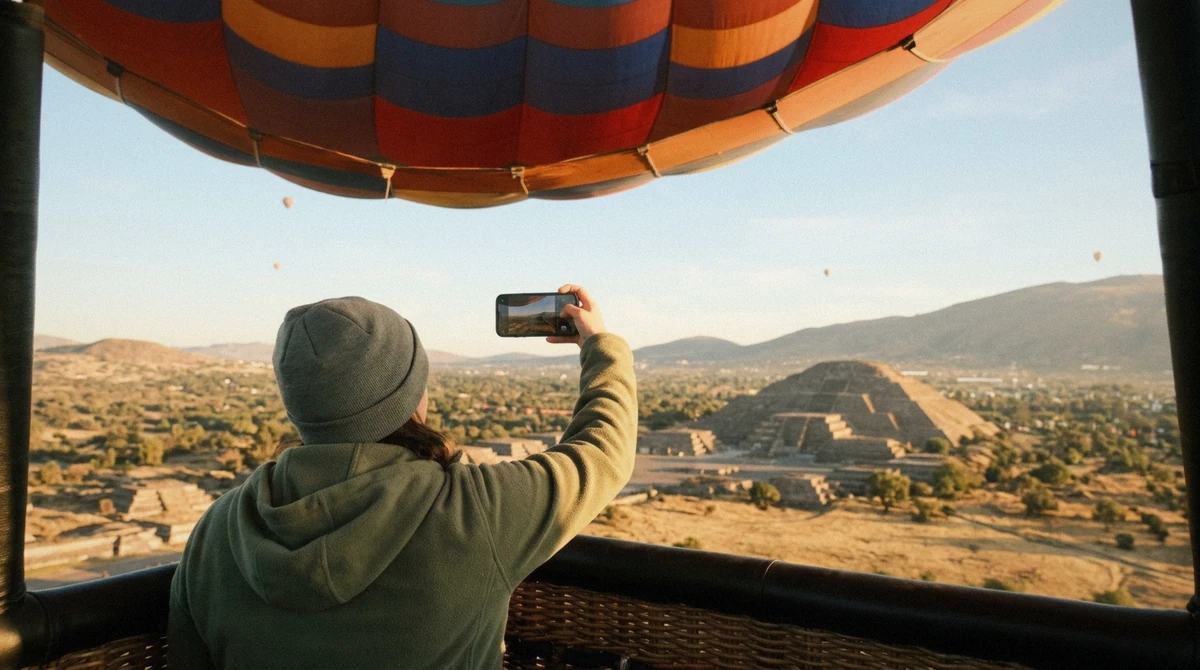
The best photos from a hot air balloon flight above the Teotihuacán pyramids come from the first twenty minutes after liftoff, when the light is still low and gold and the balloon is climbing fast enough that the valley keeps changing shape under you. I've flown this route enough mornings, and talked to enough photographers who've flown it too, to know the honest limit before anyone tells you: you rarely get the glowing sun and a clean, uncluttered pyramid in the same frame, so you pick your moment and let the other shot go. This guide covers where to point a phone or a camera from the basket, exact settings for the light you'll actually get, a shot list you can run through in order, and what to shoot once you're back on the ground and walking the Avenue of the Dead. Book one of the balloon flights above the Teotihuacán pyramids with the light already in mind and you'll come home with more than a handful of usable frames.
Quick answer
The best photos on a Teotihuacán balloon flight come in the first twenty minutes after sunrise liftoff, shooting down at the Pyramid of the Sun and Moon, the straight line of the Avenue of the Dead, and the other balloons drifting nearby for scale and color. A newer phone genuinely handles most of this; a dedicated camera does better once the light climbs and you want a longer reach on a single pyramid.
Key takeaways
- Best light window: the first 20 minutes after a 6:00 to 7:30 a.m. liftoff, while the sun is still low and gold
- A newer phone is genuinely enough for the wide valley shots; bring a dedicated camera for reach on a single pyramid
- Camera settings at first light: ISO around 1600, dropping fast as it brightens, shutter 1/160s or faster, image stabilization on
- Honest limit: you rarely get the glowing sun and a clean pyramid in one frame, pick your moment and don't chase both
- A wrist or neck strap is not optional, a dropped phone over the basket edge is gone for good
- Personal drones are prohibited on every operator's flight and inside the archaeological zone
Shot List at a Glance
Run through these roughly in order as the flight unfolds, from liftoff to landing to the ground walk afterward. The Fee column only applies to the last row, since everything you shoot from the basket is included in the flight itself.
| Shot | Where | How | Best moment | Fee |
|---|---|---|---|---|
| Pyramid of the Sun and Moon from above | Looking straight down as the balloon passes over or near the Avenue of the Dead corridor | Wide shot first, then zoom in on the stepped platforms once you have the wide frame | First 20 minutes after liftoff, low golden light | Included in flight |
| The Avenue of the Dead as a line | From altitude, looking down the roughly 2 km axis connecting both pyramids | Wide or panorama, let the straight line run diagonally across the frame rather than dead center | Any point mid-flight once you're past the pyramids themselves | Included in flight |
| Other balloons for scale and color | Anywhere in the sky around you, especially November through January | Frame your own balloon's rigging in the foreground with another balloon smaller in the distance | Throughout the flight, best when several balloons are aloft at once | Included in flight |
| Your own balloon's shadow on the ground | Looking straight down at the valley floor or farmland below | Wide shot with the round shadow shape small against the landscape | Low sun angle, so right after liftoff or shortly before landing | Included in flight |
| The burner flame at inflation | Standing near the basket before boarding, looking up into the envelope | Fast shutter to freeze the flame shape, shoot from below looking up through the mouth of the balloon | During inflation, before the sky lightens fully | Included in flight |
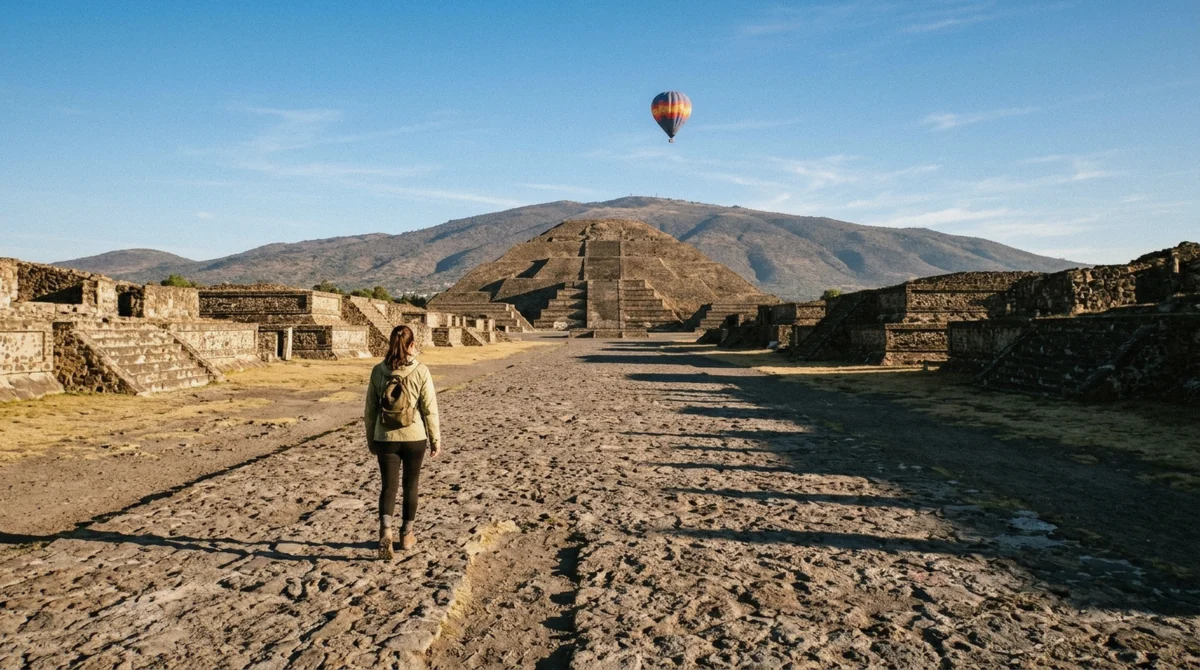
| Ground shots after landing | Walking the Avenue of the Dead toward the Pyramid of the Moon | Wide shots of the axis from ground level, then a longer lens on the pyramid facades | After the zone opens at 9:00 a.m., most packages build in free time here | ~210 MXN (~$12) zone entry |
Last verified July 2026. Nothing above needs special access beyond the flight itself and the standard archaeological zone entry fee most packages don't include.
From the Basket: The Shots You Can Only Get Up There
Pyramid of the Sun and Moon from above
This is the frame most people book the flight for, and it delivers on nearly every clear morning. The Pyramid of the Sun, roughly 65 meters tall and the third-largest pyramid on Earth, reads as a stepped, sunlit mass against the still-shadowed valley floor in the first minutes after liftoff. The Pyramid of the Moon sits a short distance north, smaller but often the better composition since the ridgelines flanking it frame the shot naturally.
Shoot the wide valley first to establish scale, then tighten in on whichever pyramid the wind carries you closer to, since roughly 90% of flights pass over or very near one or both, not guaranteed on any single morning, a question worth reading in full in what you'll actually see flying over the pyramids if the shot is the whole reason you're booking. If drone-style aerial footage matters more to you than what you shoot yourself, the balloon flight with drone video bundles a professional aerial edit of your own flight.
The Avenue of the Dead as a line
From altitude, the roughly 2-kilometer processional axis connecting the two pyramids reads as a pale stone spine cutting straight through the valley, flanked by dozens of smaller platforms most visitors on the ground never notice. It photographs best as a diagonal line running across the frame rather than centered top to bottom, since a dead-center composition tends to flatten the sense of scale. Nearly every flight crosses or runs parallel to it at some point in the route.
Other balloons for scale and color
A valley scattered with a dozen colorful envelopes at sunrise, most common November through January when more operators fly at once, is genuinely rare and worth treating as its own subject rather than a distraction in the corner of the frame. Include a piece of your own balloon's rigging or basket edge in the foreground for scale, then let another balloon sit smaller in the distance below or beside the pyramids. That same November-through-January stretch is also the calmest, clearest window of the year to fly at all, covered in full in the best time to fly a balloon over the Teotihuacán pyramids.
Your own balloon's shadow on the ground
Low early light throws a round, sharply defined shadow of your own balloon onto the valley floor or the farmland beyond the ruins, a shot that only works in the first and last stretch of the flight when the sun sits low enough to cast it clearly. It's an easy, reliable frame that most passengers miss entirely because they're looking at the pyramids instead of straight down.
The burner flame at inflation
Before boarding, while the crew unrolls and inflates the balloon by propane burner in the dark or the first grey light, stand back and shoot up through the mouth of the envelope as the flame lights the fabric from inside. This is a ground shot, not an in-flight one, so it's worth having the camera out and ready the moment you arrive at the launch field rather than waiting until you're airborne.
On the Ground: Photos After Landing
Most packages build in free time at the archaeological zone after the flight, cave breakfast, and any tasting stop are done, and the zone itself opens at 9:00 a.m. The strongest ground composition is the Avenue of the Dead leading straight toward the Pyramid of the Moon, shot from the plaza at its base looking back down the axis you just flew over. It's the reverse angle of the aerial shot, and having both from the same morning is worth the extra half hour of walking.
A longer lens or a phone's zoom does more work here than getting physically closer to the pyramid facades ever should, especially once the site fills up later in the morning. Zone entry runs roughly 210 MXN (about $12) per person, paid separately at the gate on most packages, and an optional on-site INAH guide runs roughly 300 MXN (about $16) if you want the historical context along with the walk.
Camera and Phone Settings That Work Here
A newer phone genuinely handles the wide valley shots well, the dynamic range in most current phone cameras copes fine with a bright sky and a dark valley floor in the same frame. For anyone shooting a dedicated camera, start around ISO 1600 in the first minutes right after liftoff when the light is still low, and drop it as the sky brightens over the following twenty minutes, since Teotihuacán's dawn light changes fast. Keep shutter speed at 1/160s or faster to beat the basket's slow drift and any hand shake, and turn on image stabilization if your camera or lens has it, since there's no way to brace against anything solid in a basket.
Shoot a mix of wide panoramas and tighter pyramid close-ups rather than committing to one framing for the whole flight, and accept the honest limit going in: you rarely get the glowing sun disc and a clean, well-lit pyramid in the same frame, since the sun is usually still low and off to one side while the pyramids catch even light a few minutes later. Pick the moment that matters more to you and don't try to force both into one shot. If you're staying in San Juan Teotihuacán rather than Mexico City the night before, a shorter pre-dawn transfer also means a less rushed setup at the launch field, worth weighing in where to stay for a sunrise balloon flight.
Rules: Wrist Straps and Drones
A wrist or neck strap on your phone or camera is not optional gear here, it's the one piece of advice every operator repeats before boarding, because a phone dropped over the basket edge from cruising altitude is gone for good, not recoverable, not findable later. Loop it on before liftoff, not once you're already airborne and reaching for a shot. Personal drones are prohibited on every operator's flight and inside the Teotihuacán archaeological zone itself, since a drone sharing airspace with a balloon and its burner is a real hazard, not a formality.
If aerial drone footage of your own flight is what you're after, book it through the operator instead: the balloon flight with drone video includes a professional drone edit as part of the package rather than leaving you to bring your own.
Gear Checklist
Everything on this list fits in a small bag you keep on your person, since a big bag just gets left in the vehicle before boarding.
- Phone or camera with a wrist or neck strap already attached
- Spare battery or a portable charger, dawn cold drains batteries faster than usual
- A microfiber cloth for lens condensation in the cold pre-dawn air
- Gloves that still let you operate a touchscreen, your hands will be cold at liftoff
- A small dry bag or pouch if rain is any possibility that morning
- Nothing bigger than a small daypack, big bags stay in the vehicle, not the basket
Which Approach Fits How You Shoot
If you only have a phone and no dedicated camera
don't worry, a newer phone handles the wide valley and pyramid shots well, focus on framing and timing over gear
If you're bringing a dedicated camera
set ISO around 1600 at liftoff, drop it as the light climbs, and keep shutter at 1/160s or faster the whole flight
If the sunrise-glow shot matters more to you than a clean pyramid frame
shoot toward the sun in the first few minutes and accept the pyramids will be a secondary subject in that frame
If a clean, well-lit pyramid shot matters more than the sun itself
wait ten to fifteen minutes into the flight once the light evens out across the valley, then frame the pyramid directly
If you want aerial drone footage of your own flight
book the drone video package rather than bringing a personal drone, which no operator allows
Which Tours Suit a Photographer
Every flight on this site passes over the same valley and gives you the same basic shot list above, so the choice mostly comes down to what's bundled with it. The Sunrise Balloon Flight with Cave Breakfast is the most-reviewed operator here, a safe first choice if you'd rather not gamble on an unfamiliar crew for your one shot at this. For a smaller basket with more room to move for a shot, the small-group ride capped at 15 passengers beats jostling for space in a fifty-person basket.
If aerial footage is the actual goal rather than just stills, the balloon flight with drone video is the one package built around exactly that. Anyone budgeting closely can still get the full shot list on the La Gruta cave breakfast and pyramids tour, the cheapest package on this site and rated a full 5.0.
Frequently Asked Questions
What's the best time to take photos on a Teotihuacán balloon flight?
The first 20 minutes after a 6:00 to 7:30 a.m. liftoff, while the light is still low and gold and the valley is still partly in shadow. Light evens out fast after that, less dramatic but easier to expose cleanly.
Do I need a professional camera for good photos, or is a phone enough?
A newer phone is genuinely enough for the wide valley and pyramid shots. A dedicated camera helps once you want reach on a single structure or more control over a fast-changing light situation, but it isn't required to come home with strong photos.
Can you take photos during the whole flight, or are there restrictions?
Yes, you can shoot the entire flight, the only real restriction is around the burner controls, which only the pilot operates, and a firm rule against personal drones on every operator's flight.
What camera settings work best for a sunrise balloon flight?
Start around ISO 1600 at liftoff and drop it as the sky brightens, keep shutter speed at 1/160s or faster to beat drift and hand shake, and use image stabilization if you have it, since there's nothing solid to brace against in a basket.
Will I get a photo with the sun and the pyramids both in frame?
Rarely both at once. The glowing sun disc and a clean, evenly lit pyramid usually happen a few minutes apart from each other, so pick the moment that matters more to you rather than trying to force both into one shot.
Are drones allowed on the balloon flight or at the pyramids?
No. Personal drones are prohibited on every operator's flight and inside the Teotihuacán archaeological zone. A tour with a bundled professional drone edit is the workaround if aerial footage matters to you, covered above in the rules section.
What happens if I drop my phone during the flight?
It's gone. A dropped phone or camera over the basket edge from cruising altitude cannot be recovered, which is why a wrist or neck strap looped on before liftoff is the one piece of gear advice every operator repeats.
The strongest photos from this flight come from timing, not gear, the first twenty minutes of low gold light, a strap already looped around your wrist, and a willingness to pick one good frame over chasing two impossible ones at once. Everything else on the shot list above is there for you, phone or full camera bag alike.